Get expert insights on the latest litigation research
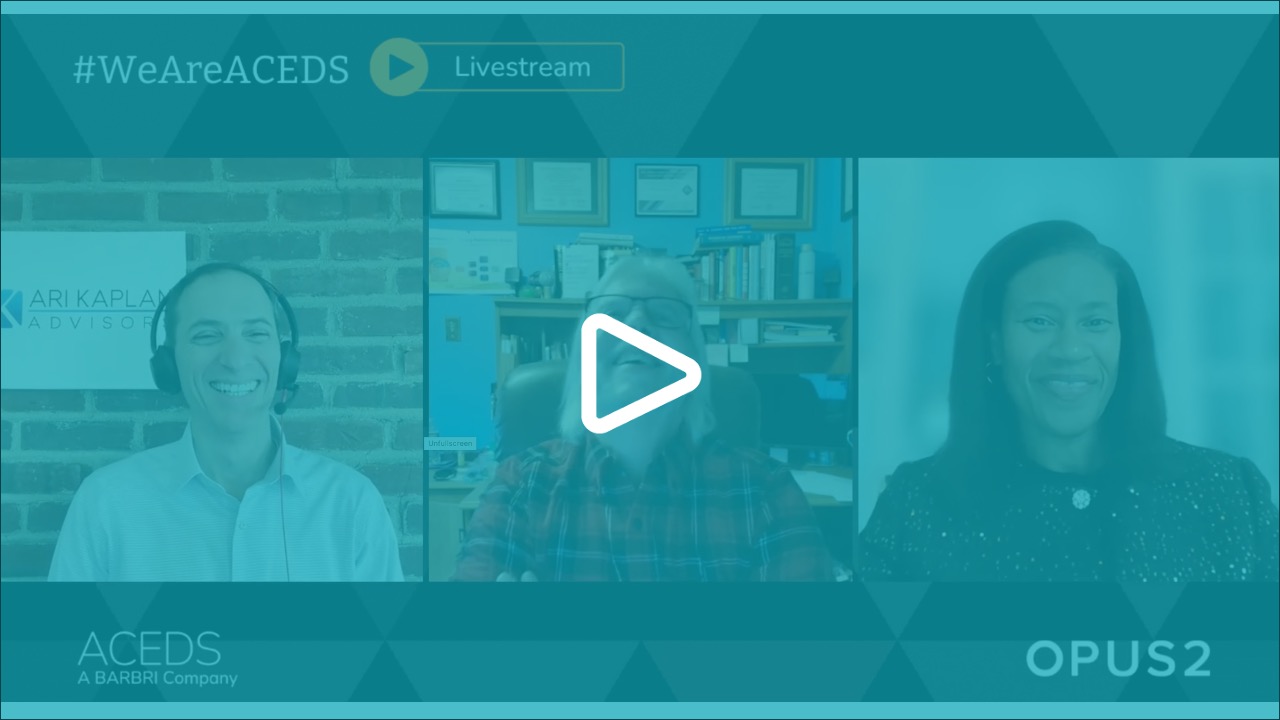
Recent research from Ari Kaplan Advisors explores the market trends, technology, and case strategy challenges facing partners and senior trial lawyers. But, what do the findings mean for law firms? This discussion between Ari Kaplan, legal industry analyst, and Kenya Parrish Dixon, partner at Nelson Mullins discuss how law firms and legal professionals can stay ahead in a rapidly-evolving litigation landscape.
Watch the session to explore:
Adoption challenges in the age of AI
Despite a wide-spread belief that AI is not only a competitive advantage, but also a market necessity, only 61% of partners and senior lawyers use it routinely. Success can be found in training, enablement, and ongoing education.
Lawyer vs. litigation support perspectives
How and when litigation teams engage with technology, depends heavily on user roles and needs. The research findings highlight key areas where lawyers and litigation support professionals align.
The emergence of case strategy technology
As partners and senior lawyers become more comfortable and confident using AI-assisted workflows, the value of emerging case strategy technology becomes clear. How will AI deliver value to different aspects of case strategy?
name is Mike Quatero. I’m the president of ACES. Today, we’re going to be joined momentarily, by Ari Kaplan and Kenya Parish Dixon. And we’ll get into their backgrounds a little bit, but our focus today is a report that Ari recently prepared entitled the emergence of case strategy technology as a competitive advantage in evolving litigation landscape in an evolving litigation, which he authored this past summer. After interviewing dozens of law firm leaders, the development of the report was sponsored by Opus two, which is one of ACED’s affiliate partners. Thank you, Opus. And that brings me to my friend, Kenya, who in addition to being an ACED’s advisory board member, is also a practicing litigator. We thought it would be interesting and kinda meaningful to our listeners if we brought together Ari and Kenya to talk about some of the conclusions in the report and the state of play in case strategy technology, how it factors into practice. Ari and Kenya, thanks for joining the broadcast. Thank you for making the time, and welcome. Thank you for having us. Yeah. Thank you so much, Mike. Good to see you both. I always like to start with a little bit about our guests. So for those who don’t know Ari, tell our listeners a little bit about yourself, what you do aside from, you know, the various ASEDs related things. What what’s what’s gotten to you this to you to this place in the ediscovery universe? What has gotten I’d like to first start by saying that Kenya and I are both fortunate to serve on the ASED’s global advisory board, and I I serve as the chair. And I still remember when I asked Kenya if she would consider serving and how honored I was that she agreed to do so. So I’m just so grateful that that she’s here with me. And, of course, Mike, we know you well, and we’re proud to be part of this community. So I’m a lawyer and an analyst who covers the legal industry. I have the really remarkable privilege of convening lots of discussions, whether those discussions turn into research or breakfast or my virtual lunch or dinners, but just or or our wonderful series that take place on two PM on Fridays. Just to try to understand where we’re headed, I’ll just say my work is basically this, that when I was a kid, my dad used to always ask me to hold the flashlight, and I never liked doing this. And sometimes he’d even ask me to hold the flashlight in the daytime. And I realized over time that my dad never actually needed the light. He just wanted me to learn. And I feel like I’m still holding the flashlight, but for our community and just trying to kind of gather all of the perspectives. And I look forward to talking about this research, given the perspectives of of litigators, and I’m happy to be, you know, joined by Kenya, who herself is a a prominent litigator. Yeah. And, a storied career. Kenya’s been in all quadrants of our legal universe. Kenya. Oh, there we go. Mom, I’ll call you back. It’s a solicitor. So, anyway, Kenya, tell us a little bit about your how you found yourself in this station in life. Oh, gee. I have no idea. Let’s see. I graduated from law school in eighteen twelve and went to went to William and Mary and then joined, you know, a law firm, went to another law firm, ended up at Lockheed Martin in technology, went to the government, you know, FDIC, FTC, the White House, worked for a president, then went to tech startups. And all along, I think I really wanna say that it was probably around two thousand six when I was introduced to this idea of this technology that, litigators were using. So I was a litigator at a large, well known firm, and, we had all this data. The data you know, there were two massive corporations that are still well known, that were were battling it out, and we had all this data, hundreds of of employees and witnesses that had to be managed. And I remember the managing partner telling us that his son had created this this technology that we were gonna use to to review all of the the documents. And it was it was just a disaster. I mean, it really was. The application kept failing, and nobody had to use it. And we were we had all these people that were you know, that we were hiring to do document review, and and it was just a mess. The case went fine. Everything was reviewed, but I was so intrigued by the technology that I I spent a lot of time examining the actual app that we were using and the the the the infrastructure that was supporting it because, there wasn’t a lot known about data centers and and the hardware that supported it at the time. And I I I just followed that path for quite a while, and it served me well. I mean, it it really has because who knew back then that technology was everything, and that this is where we would end up. Yeah. No. For sure. Love it. Ari, I wanna, just kinda set the stage a little bit. Obviously, you produced this fantastic report. How did you get involved here? What what was the overall purpose? Can you just set the stage a little bit? Give us kind of the the executive level overview on the report, and then we’ll get into some of the findings. Absolutely. This is the second year in a row that I’ve had the privilege of collaborating with Opus two on trying to develop independently sourced research looking at the litigation landscape. Last year, I interviewed a cross section of litigation support leaders at large law firms for a report about advancing litigation to promote growth in what was and what continues to be a changing legal market and trying to figure out strategies that they were deploying, it it really looked at case management software. It looked at client expectation shifts. It looked at the litigation life cycle, adoption rates, things like that. This year, as you mentioned, between July and August, I interviewed thirty one litigators. So what we were trying to do is create a sort of a comparison between those who are on the front lines of implementing and deploying technology for the purpose of transforming litigation and those who are in the trenches litigating and at trial and consulting with clients. And so I interviewed thirty one lawyers at large firms. In fact, the median number of lawyers at those firms was nine hundred and eighty seven, so very large. Seventy one percent were partners themselves. And our objective this year was to understand how are litigators and trial lawyers leveraging technology to stay ahead? The legal environment is changing very quickly. Kenya just talked about this need to deploy technology to manage the ever increasing volumes of data. We looked at market trends, case strategy approaches of the impact of case management software. Obviously, AI and all of the various use cases that have been super practical. And, essentially, the report shows that there’s really a convergence of all these different operational challenges that technology adoption is growing, but growing in a very tactical way as opposed to theoretical or hopeful. And firms are feeling this imperative now to figure out how do I embrace AI in a way that’s gonna allow our work to be even more impactful and also provide greater service to our clients. And ultimately, the conclusion was there’s an emergence of this new case strategy software category so that people can leverage technology to build narratives more effectively, to tell a story in a way that may not have been as easy a few years ago. Now all of a sudden, this idea of using technology to transform how you litigate is a reality. And I think that’s really like, I worked in litigation for many, many years, and I I you know, at the end of the day, what you wanna do is tell a persuasive story. So anything that helps us get there, I think, is is is gonna benefit certainly clients and and the lawyers who represent them. Ari, in the report, you conclude that there’s this shift in litigation and market trends. You alluded to it just now. What are sort of the top things that your research unearthed in this regard? And if you could compare it to last year’s report a little bit so people could understand the evolution here. Sure. I mean, one of the everybody who’s listening recognizes that the market is changing fast. I mean, I do several reports a year looking at what’s happening in law firms of different sizes, what’s happening in the corporate legal department, what’s happening specifically in our ediscovery community, what are the the data challenges. And so last year, we were we were looking at this, and we were trying to understand our people using case management tools? And the overwhelming, group were, what are they doing with technology? How much are they doing manually? And what was fascinating is that, you you know, the the amount of data has grown, people are using technology, and yet there’s still manual processes that are taking place. When I asked people last year, are the trial lawyers themselves using some of these tools? There was a lot of discussion about, well, that’s the responsibility of litigation support. That’s the responsibility of the more junior people. The trial lawyers are focused on actually executing on on delivering, certain aspects of trial. This year, the discussion with those individuals themselves was much more like, I’ll take any advantage I can do to gain a competitive edge. And if that means finding missing elements that I wouldn’t have thought of, and you’re seeing a lot of this. You’re seeing you know, I ask questions about, are you using technology to better value a matter? Are you using technology to expedite? How much of your time is spent on the tactical versus the strategic. And you can see elements of people feeling strongly about trying to focus more of their time on the strategic and less of their time on some of the deadline oriented tactical aspects of managing litigation, which obviously, as Kenya knows, in a large matter is a big part of it. There’s a huge responsibility. But with the sort of the growing volume of data, the the the growing complexity of these cases, the transformational nature of regulatory environment, all of these things need to be managed in a way that is much more streamlined. And this research is really showing that. So between last year and this year, Mike, the the difference was much more of a tactical look versus a strategic look. And the idea of using technology to enhance your strategy was a theme that that continued to come up. Kenya, is this, resonating with in other words, is this aligning with what you’re seeing in your practice, on a on a day to day basis? Oh, yes. So I don’t remember how many months ago it was that Ari and I first had but I think I believe the weather was warm. So that that that short period of time between then and now, I’ve seen a half a dozen additional uses for, AI supported technology, that have, you know, come across my plate. Some of them I have rejected strongly. And I I’ll and I’ll tell you that that when you get on a on a call with multiple counsel from multiple firms just to schedule, just to start discussing the schedule of hearings, you will find that there’s always one firm that wants to record everything because there’s an AI tool they use to synthesize everybody’s thoughts, opinions, comments, and give them some strategy. And I object to that every time because I don’t want them using my the things that I say in the call, but I would really like to use the things that they say in the call. You know? So you have to consider, you know, what you have to balance whether using it yourself to get what you want out of out of the tool, you know, is more beneficial than allowing them to have some insight into into your strategic thinking. But everything from from the phone calls to administrate a lot of the administrative tasks we see on a day to day basis that partners have no choice but to use. You know, in a large firm like Nelson Mullins with over twelve hundred attorneys and almost forty offices, we really, can have a thousand open files per partner. That’s the bat line. I think they’re they’re falling. When you’re the president of ACES, the phone never stops. And and so you you have a thousand files. You may know in your head, you know, the facts of the case that you who the witnesses are, what, you know, what’s going on with the case, and you you’re thinking about how to manage all of that strategically. But there’s a lot there are a lot of elements that you may not be aware of. And AI is very helpful in saying, you know, just just prompting. You know, if this scenario exists, what should I be asking? What should we be doing? What, you know, what elements should we be looking at? What sort of witnesses should we be interviewing? And then you can pull together these large outlines that you can then manually go through, revise, edit, and make into something that you can pass off to associates with instructions on what they should research. Once you understand the prompting process, you can get really very close to creating outlines that can help your team help you develop the case. And and if you’ve got a lot of cases, it’s it’s just very helpful in trying to manage a thing. And from an administrative standpoint, someone told me recently that you put all the the the insurance company guidelines into, you know, the firm application. And then when you’re getting all of the, you know, the feedback about the the billings and all the these billings, you can really go through, and it will help you put the right language in in order to send, you know, all of the bills back. That can that’s two days off your plate. I mean, really, going through insurance billings and all the rejections and the rewrites, that’s two days off your plate if you have the right technology in your environment. You know, I wanna just Mike, I wanna highlight something that came out of the research that really, Kenya to emphasize one of Kenya’s points, which is she mentioned all these different lawyers are, you know, on a call and using this tool, wanting to use that tool. Last year was a lot of exploration still. And this year is much more urgency, and I think we’ve moved and really crossed that chasm. Last year, I asked about competitive advantage, and there was a discussion about leveraging lots of these tools that include AI, some better than others, and that may be giving a firm a competitive advantage. And there was even a recognition that at the time, that competitive advantage would be limited. The period of time for which they could maintain that advantage would be limited because at some point, everybody would have a tool that had a similar functionality, which is why now that firms that might not or aren’t as good or as sophisticated or capable of leveraging that tool are feeling this sense of urgency. Because for sure, even though this research focused on senior lawyers, typically litigators and and trial lawyers at large organizations, there is a recognition that the clients have come up to speed in terms of parity at at a level of sophistication. And so they recognize that they expect their firms to be able to navigate this process really, really effectively. They ask questions about it. They wanna have that conversation. They want them to have a fluency that has driven some of this urgency. I want to follow-up, Kenya, and I’ll get your comments to Ari. But I wanna follow-up because I sorta came up in between, eras here where I I started working in legal when things were very analog and we we progressed to, technology. And one of the things that, one of my bosses over the years told me was that, you know, this this is this is a game changer. This levels the playing field. This this allows smaller firms to compete. And so part of the report from Opus two focuses on, this notion of having a competitive edge. And eighty seven percent of those surveyed, according to the report, believe that an AI enhanced case strategy provides that competitive edge. Kenya, my question is aside from you sort of enabling a smaller firm to punch above their weight, so to speak, which is what most technology enables, frankly. What in your view is the competitive advantage that an AI enabled tool, whether it’s case strategy or something else, what what what does that afford legal practitioners that we didn’t have in the past? Well, it’s a time saver. Right? So there are only so many matters you could handle in the past because there’s only so many hours in a day and and a week and a month. But now because you have and and I see solo practitioners and smaller firms are the ones that really introduce into most of our calls a lot of the AI technology. And and I see it in the work product that they submit. I I I mean, you can kinda still tell, but I see it very frequently from the smaller firms that we’re interfacing with. So I do think it allows smaller firms to handle more matters and keep their thumb on on everything that’s happening. You know, in the past, smaller firms were kind of thought of as the place where your case might go to die. They may miss a deadline. They may not be able to keep up with the volume of work. But now, you know, not only are they recording and having all the calls analyzed and and having the witness list ready, when you send you know, sometimes you’re you’re trying to bully the other side and send them a list of all if they don’t settle now, here’s a list of all the witnesses that we’re going to start deposing in two weeks. We want all these witnesses, and we’ve got got this huge list. And within thirty minutes, they send you back a a list that’s twice as long. They did that with AI. You know, they they they obviously took your list, inserted it into something, and they came out with an understanding of what the opposing, viewpoint or strategy would be, and they send that to you rather rapidly. It’s and the reason I know it’s AI is because a lot of the times the people on the witness list are spot on, but there are also a number of people on there that, you know, you would you would you would not have thought to yourself, this is a person. There’s not there’s no value in having us depose this person. But you see the list. It comes fast and furious, and then they have time to sit down, decide whether or you’re really gonna depose this individual. But you see now they’re able to keep up. So when you’ve got a a big large firm and it’s heavily your case is staffed well and you’ve got all the, you know, the people with the different expertise that are strategizing on how to move forward and you see a smaller firm is able to respond quickly, maybe it’s not filled with all the strategy yet, but they’re they’re they’re catching up. Right? So the advantages of being a larger firm, they’re closing that gap. And it it still takes a lot of their time, but once they’re once they’re comfortable with the software and the technology, they use it for everything. Now the good thing about, you know, being on this side of the house is that, we can look at that and tell, okay. They haven’t strategically gone through and figured some of these things out, but they’re spot on with, you know, thirty percent of this. And that that speed, that ability to generate that quickly is new. Yeah. And, Mike, I think that it’s important to acknowledge that there are so many different critical elements of this process. You know, to Kenya’s point about the scalability of a small firm to a midsize, a midsize to a large, you’re clearly seeing that flattening and an interesting landscape developing. But I ask questions about overcoming certain challenges related to case strategy. People talk to me about the time consuming aspects are, analyzing documents. Fifty two percent said that’s the most time consuming. Some people said assessing evidentiary gaps, almost forty percent. Managing character information, linking case elements, all of these different processes need to be integrated and aligned. And so the the more resources you have, the easier there are more people involved, but that actually can be done now more effectively. I mean, eighty seven percent of the participants that I spoke to said that AI enhanced case strategy gives them a competitive edge. And so if you are, again, not in that group, you’re clearly in the minority, and you’re may not be doing whatever you’re supposed to be doing in the most optimal way. And I think that’s a really important point. It’s not looking at organizations that are deficient. It’s much more trying to say, how can you improve? Where can you maintain your edge? Where can you layer on talent on top of the technology? Because that’s what’s really happening here. Everyone is trying to figure out We’re a incredibly, successful organization. We have gifted lawyers like Kenya on our team. How do we now take technology and emphasize and amplify as opposed to have to fight over things, deadlines, dates, technicalities that are less and less of a crucial element on the tactical side because there are case management tools to do that. Now we’re sort of advancing to case strategy. And to give you another example, you know, back in eighteen twelve, we used to sit you know, at at my firm, we would sit the whole team would get around the conference room table and, you know, the partner that was in charge would say, there’s no dumb ideas. Throw everything out. And so we’d throw everything out and try to come up with this with our strategy, with our narrative, you know, what what what is what documents do we need to support this, what tech you know, what, evidence do we need? What people do we need? And so we would be throwing this out series of the case. We’d be throwing these things out, and about eighty percent of that stuff would get, you know, swept off the table and would be u useless. Twenty percent would be spot on and then or or or close, and then we could take you know, we’d narrow it as time went on. You can do that now. You can ask AI to to create that strategy for you. You can quickly go through and say, no. No. No. These, you know, these sixty thing these sixty points are not going to help us here because you know some things that you have not put into this application. Right? It’s giving you a very generalized broad view, but then it’s going to come up with some things that you didn’t think about when you were sitting around the table. And there there are going to be some points there that you go, oh, nothing is yet surpasses the experience of being a you know, the the long term experience of being a lawyer and being trained as a lawyer. So as you’re thinking about those things, you still need your own brain to strategize. But the tools can throw out things that you may not think of because you don’t think of everything every time. And so there may be something there that you go, oh, I I hadn’t thought of that. I recently was looking at a statute that had been rescinded and replaced with another statute, but I was looking for a formula that used to be used with the previous statute, and I couldn’t find it. I I knew that they were doing I knew that the the government was doing something, but I didn’t know what what how they were they were selecting this. And so I was able to prompt and, you know, everything I wanted to know about this particular statute that no longer exists. And then I could send the results of that to the the associate and say, I need you to research this, look for this, and she was able to find it in really short a short amount of time instead of just looking through, you know, all this stuff about a repealed statute. And it and it really helped me come to a conclusion much quicker than I would have come to if we had just sat around reading all the legislative know, the things you used we used to do. Just can’t do that anymore. No one’s paying you to do that. And yet there’s still some adoption challenges, and I wanna segue to that really quickly and get both your thoughts on this. Because, you know, obviously, eighty seven percent is a is a large majority, but who what what is that thirteen percent thinking, Ari? What from your conversations, what do you think is the obstacle to adoption of these newest and emerging technologies? And and how how are firms overcoming it? I don’t think the adoption challenges are unique in this regard. Again, so if you would imagine that more than seventy percent of the people I talked to were partners at large, large law firms and also talented litigators and trial lawyers, they have a way of doing things. You know? And they pride themselves on the experience that they’ve gained over twenty, thirty, forty years. And as a result, technology to some individuals is a more of an an impediment to their particular workflow, and also they have support. So sometimes they will say, I have an incredibly smart head of litigation support, and she or he are are the person that runs the show for me. And as a result, I don’t know about that, and I think that my clients hire me for my intuition, my judgment, my talent, and I have a great infrastructure around me. At the same time, they recognize that when they go into court or go into a negotiation or go into a meeting and someone is able to, you know, just sort of find the clause or immediately get to the deposition transcript portion that is relevant or, you know, contradictory, they recognize that that that talent, that judgment, it can’t be exclusive anymore. And so that’s where that’s what you’re seeing. I mean, you know, the time frame here is also accelerating. We talk about five years, three years. I mean, are changing every six months. It’s incredible, Ken. You just mentioned, you know, to having a conversation in the summer, and here we are a few months later. And the the volumes have changed. The players have changed. The investments have changed. The development is different. It’s just an extraordinary period in which we find ourselves, and those who are most adaptable will continue to kind of maintain that edge. And those who choose to wait may be in a bit of a perilous situation. I mean, one example of that is that, you know, associates coming in get trained on all the AI stuff, like, immediately. Like, all of it. Like, they just get all the training. It’s offered to them. They get they get logons. They have a limited number of know, not everyone gets a log on into every tool. And if you’re a more senior person, you’ve got to kinda scope that out and then go back and say, well, wait a minute. Can I get a log on to this? But the thought process really is, look. The associates know how to do this. And so they really are the ones who are like, they they they’re almost it’s magical watching the associates takes take an assignment and really come back to you within hours, not days. Whereas it used to be, you you give out an assignment, you check back in a few days, they come back in hours. And and and this and what they’re doing is accurate. So it’s it’s it’s really changing the game. But as if you’re an older person, you have to seek it out. And when I say older, I don’t mean necessarily your chronological age. I mean, if you’re a more senior person in the organization, you’ve gotta kinda seek out some of the tools to determine which ones you wanna use and how you wanna use them before you go in and ask because it’s time consuming. You have to get some training. You have to have some understanding already at how to prompt, these tools. And, really, you could have associates and paralegal to do some of that stuff. The the the disconnect, I think, still is that we don’t share brains. So it’s really fabulous that the associates can do the associates and the paralegals can get that stuff done rapidly, but still the strategy is coming out of my brain. So I still need you know, if I could just share my my brain strategy with the associates and the paralegals and they could run with it, then I’m still practicing law in an old school manner, but they’re using all the new technology, and you’ve got the meld. It hasn’t happened yet, but I fully expect it to be here. I mean, this is the leaps and bounds is every it’s every six months. Yeah. For sure. Alright. We’re almost out of time. And before we go, I always like to get, sort of your, your future look. Is there anything new, anything interesting coming? Is there something you wanna share with our audience today about something you’re doing personally, a speaking engagement, whatever? Any big things coming up for either of you? Ari, first. If anybody’s interested in some of these details, I have I host a virtual lunch every weekday at noon typically, and I have an extraordinary roster of in house leaders who are gonna be my guests over the next ten days. But I will just say that this is very lucky work for me. I it it’s not lost on me that that people put their trust in me, not to reveal who they are, but to compile their views, and I feel a responsibility to share that with our community. So I’m always open to have conversations with folks. I feel tremendously grateful now two years in a row to be doing this with Opus two who’s super committed to, identifying as a leader in the space, just identifying where there are opportunities for firms, and they’re just they were a wonderful group to be with. And I just wanna say last thing. Thanks to ACEDS, and, also, thanks to all of the lawyers who spoke to me. I mean, they give me their time, and I try to, in return, honor that by sharing this, data in a the mean most meaningful way possible to community. Kenya? So I I you know, I’m on panels everywhere all the time. It never stops. But I am really I I’m in the process of building this practice here, so I spend most of my time working, because that’s that’s the gig. But I interface with a lot of, newer attorneys, and I think that’s the most exciting thing. Because I remember many, many years ago, I went back to William and Mary to teach an introductory course in ediscovery, at the law school. And the first time I went, the students were taking notes on notepads. And everyone had a notepad or notebook and would say we’re taking notes. And then, you know, a few years later, half the class had laptops and weren’t taking were taking notes on laptops. And then finally, everyone was using a laptop or some sort of tablet or notebook. No one was taking handwritten notes. And and the first time I went back, the professors came and sat from the rest of the university came and sat in the class because they wanted to know where the cloud was. So, I mean, things have changed. So and and many of those professors were still there. It’s up in the sky. But the the students are so much more they come out of law school with a very innate understanding of the technology, and they use AI for everything. So they’re very in tune. They just you know, you just gotta point them to the application or the tool, get them the training, and they’re off and running, and there’s no hesitation. And it’s wonderful to have add those people to your team. Appreciate that. Alright. We are out of time. Thank you so much, Ari. Thank you, Kenya, for a fascinating conversation. Thank you, Opus two. If you’re interested, you can learn more about Opus two at opus two dot com. And if you’re interested in our short form video interviews like this one, you can find We Are Aced’s live streams in your LinkedIn, your Facebook feeds. And if you’re interested, check out the Aced’s YouTube channel where you can watch previous interviews and more. As always, thank you for joining us today, everyone, and be kind to one another.
Want to explore how Opus 2 can
give your litigation team an advantage?
Featured speakers
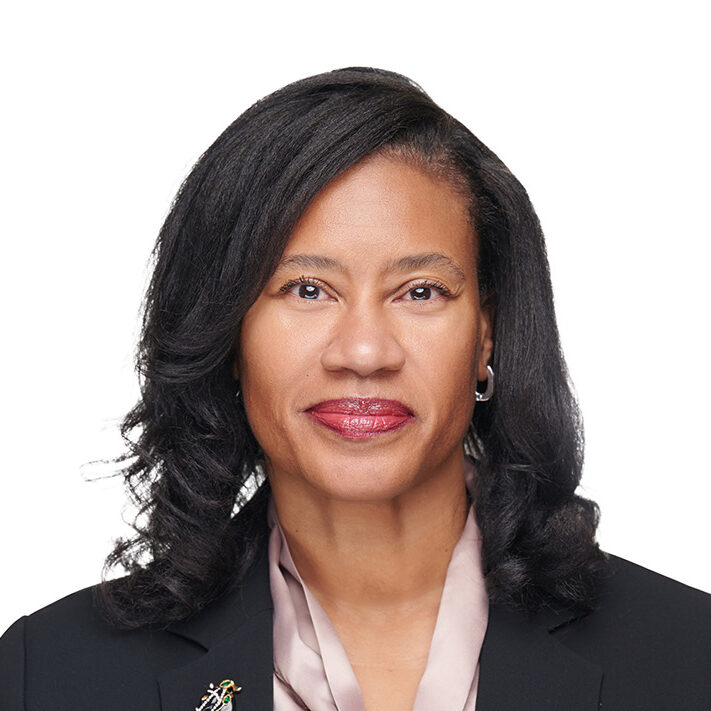
Kenya Parrish Dixon
Partner


Ari Kaplan
Founder and Principal