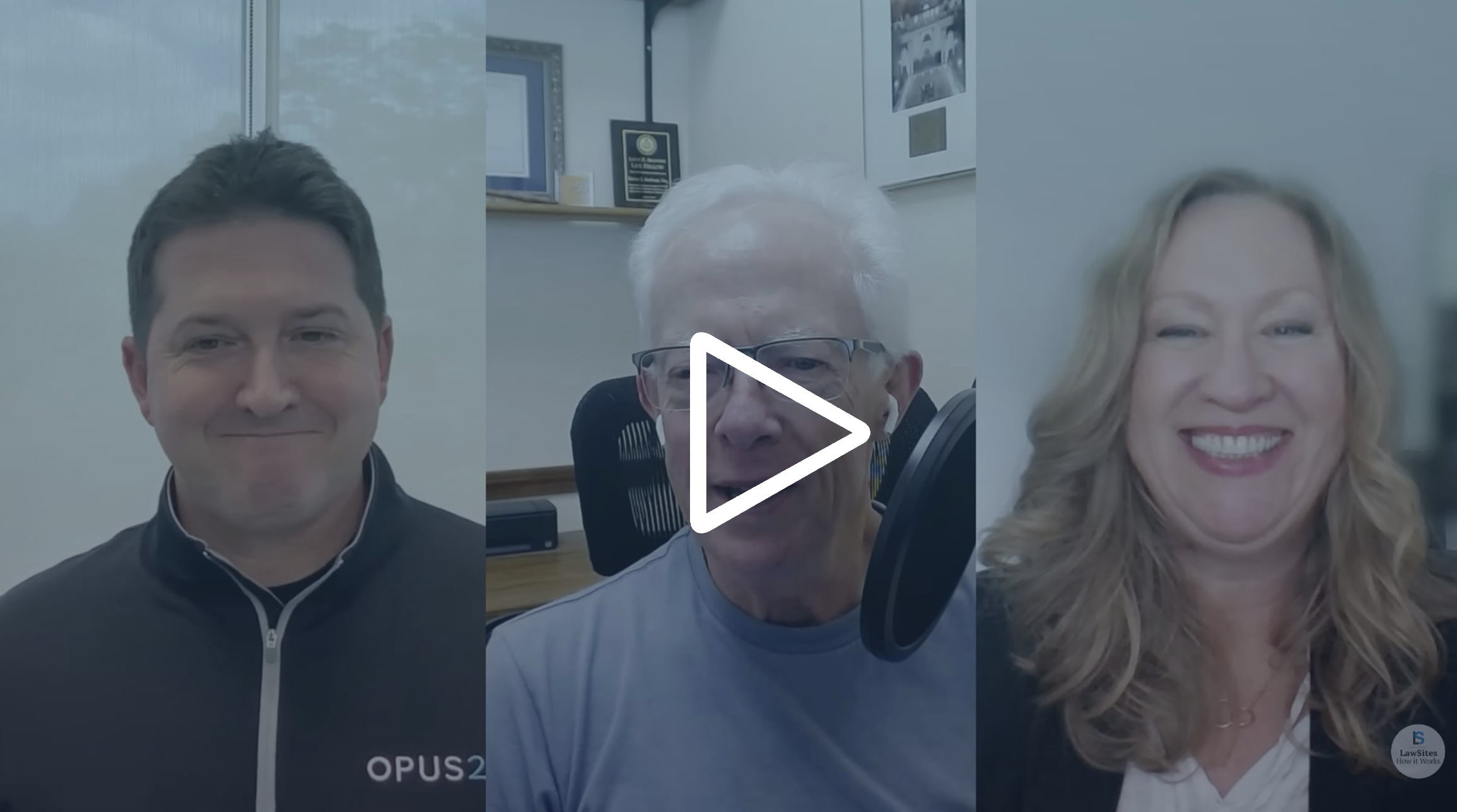
Hosted by ACEDS and Opus 2, this webinar offers expert insights on the current state of eDiscovery and case management as well as how market trends are influencing litigation support teams.
Key webinar insights:
- The importance and impact of connecting e-discovery and case management
- Strategies to address market trends including increasing data volumes
- How technology and emerging AI enhance e-discovery and case management
Let’s get started. Hi. I’m Ari Kaplan, an analyst that covers the legal industry, and welcome to connecting ediscovery and, case management to optimize outcomes. As as you may know, I serve as the chairman of the global advisory board for ACEDS and also had the privilege of conducting some research for Opus 2, which I’m very excited to be talking about today. I am honored to be joined by Jigna Dalal, director of litigation support and eDiscovery at Beveridge and Diamond, and Mark Woods, an attorney and solutions consultant at Opus 2. Jigna, Mark, great to see you. Great seeing you. Awesome. I just wanna I just wanna highlight something just for the record that normally I’m in front of a brick wall. The folks in the ASETs community may wonder where’s the brick wall. I flew to Milwaukee to see the Mets play the Brewers tonight, and I’m doing this from there. And I just wanna congratulate some of my Opus 2 friends, who are in Kansas City for the success of the Royals. Alright. So with that in mind, we’re gonna have an awesome discussion today. I’m gonna share some thoughts about the state of ediscovery and the ediscovery and filter research that I’ve done. We’re gonna talk about some emerging challenges and best practices, how teams can exceed client expectations. We’re gonna wait a while, but we are gonna talk about generative AI and where that fits into the spectrum. And then looking ahead and hopefully your questions although, I just wanna say that as many of you know, I really try to encourage questions throughout. And if you wouldn’t mind, maybe put into the chat where you are, where you’re from, maybe your title, your role, because I think Jigna and Mark love to tailor some of their experience and some of their responses to that perspective. And so let’s get started. Super excited about this. So state of your discovery. Actually, I would I would love for for Jigna and and Mark. If if you could describe the state of your discovery, I’ll talk about so you may remember that I do an annual report. I’ve been doing it now for ten years, and I look at a basket of companies and a whole host of trends. Where are companies investing? You know, what you know, I started ten years ago, so I asked about movement to the cloud. Only recently did I start asking about AI. And so when I think of the state of ediscovery, I would say that it’s in a moment of opportunity. It’s like a really at an exciting inflection point. I feel like that’s my perspective right there. My brand is sort of, like, enthusiasm, I guess, for what’s coming and what we’ve seen. But I wonder for you guys, so these are some of the the issues that came up. What’s the state of eDiscovery? I asked generative AI and guardrails. I asked about greater adoption of tar. Frankly, we’ve seen a shift in the risk metrics in eDiscovery. Tar used to be, as you both know, like, thought of as a risky something or other. And now it’s sort of well, TARs. People’s we’re experts at TAR. Generative AI is an issue, automation, and and the equilibrium between automation and human work, all these different privacy regulations that are that are happening here abroad, the m three sixty five, of course, all the different data types that we’re seeing. What is a custodian? It used to be Jigna’s on my list, Mark’s on my list. Now it’s it’s a phone here and a and a bot there, and who knows about, what prompt engineering is gonna look like. And, of course, all these self-service tools that have become standard. So I would just I’m just curious, for you, Jigna and Mark, just like in your mind so I’ll start with you, Jigna. The state of eDiscovery, is it consistent with what I think it is in terms of opportunity inflection, and or do you see it differently? I absolutely think so. Right now, I feel like we are definitely back in, like, mid two thousands where there was a huge hype and conversation about technology assisted review or predictive coding taking over the world and us becoming, you know, their servant. And I think this is the next inflection point where there is more, we are getting away not getting away from machine learning, but we are building on top of it the generative AI additional technology that is going to help us move our starting line and our ending line. So that that is very exciting to kinda see how it evolves, and I very much see the AI at least, piece of it very disruptive in the pre technology or trial prepper pretrial or trial prep, phase, that I think is going to have the biggest impact in my opinion. Wow. I love that. Alright. So disruptive. I I I took away all of all of what you said, I took away disruptive. Mark, I’m just curious. Is there, like, a way that you’re seeing the state, how you would characterize it given your time and practice and now with Opus 2? It’s certainly changed. There’s no doubt about that. Right? I think that it’s certainly an opportunity to sort of do new things just like Tar was, you know, ten or fifteen years ago. But, honestly, when I start thinking about ediscovery, I kinda become overwhelmed by how much there is. Right? And I know that you’re gonna talk about that a little bit later in this webinar, but just the massive amounts of data and and just how complex that data is, I think, is overwhelming or can be overwhelming to to folks these days. So I I definitely think that there’s opportunities here with new generative AI tools that are coming out, and more opportunities for litigation teams to sort of do more with with what they’re doing. But I do think that it can be an overwhelming thing too if you really step back and and and look at it. Overwhelming and disruptive. So I’m gonna try to navigate changing the slides, asking the questions, and taking some notes in the chat because I just think this is is super fun. Alright. Jigga, let’s let’s look at this. How are you how does your team given your experience, how do you approach litigation support with an eye towards the life cycle of a matter rather than just focusing on early stage. I’ve you know, so I did this research as, you know, I’ll talk about it in a second, but what what and then and I was lucky to to speak at at Relativity Fest recently with Kim Bookout, and we talked about this sort of thread, like, really trying to draw a line, a holistic line from the early stages of the discovery all the way through from case management and into trial prep, and really try to have this wonderfully, you know, broad view of the process. So for your team, how do you approach leadership support with an eye towards the full life cycle? Sure. You know, more technology changes or evolves. Right? I’m always about going back to our basic roots and understanding, you know, the data, as a whole. And I think, I saw in our chat that many people are either, very technical or project managers and it’s a global diversity and a lot of paralegals with ediscovery expertise. And what they have learned is that what you fall back on on your basics is to understand any the entire life cycle through the perspective of authentication and verification of data, making sure that what you are collecting is authentic, what you are reviewing is, accurate and can be verified and it is properly preserved. So, idea is to really look at diversity of data with the eye toward the end goal of how would this be presented at a trial at a deposition. Mark, one of the things that I found in my research was that to accommodate, you know, the changing nature of litigation, more than two thirds of people are using some sort of fit for purpose case management system, and yet almost a third reported using something that was so old, they felt like it was inadequate. How do you let’s let’s level set here. How do you define case management? Why does it matter? Yeah. It’s a really good question because I think if you were to sort of Google what is case management, you’re gonna get responses all over the map. Right? You might you might find true practice management tools that will pop up like your Clios or or similar tools. But, really, what we’re talking about when we’re talking about case management or or what we wanna do on this webinar today is sort of distinguish it from just basic, like, reviewing and producing documents or even drafting documents. Right? So when we think about case management, what we like to think about is how do you take all of those really key or important documents? How do you organize them in a place where you can collaborate with the people that you need to collaborate with them on and do the things that you need to do with them. Right? So that can include highlighting specific portions of documents because they relate to specific issues in your case. It can include taking notes within those documents. Beyond documents, though, it’s also important to note that, you know, you need to keep up with all the important characters or organizations that are involved in your case. So where are you doing that? Are you just doing that in a word document? Are you doing that on some other fit for purpose system? Where can your team members go to see who all is involved and to see who they’re related to, what documents or events they’re related to? Where do you keep up with all your events? Right? Like, how do you draft your chronology? How do you know what’s going on in your case? We think that’s also a huge part of of case management or effective case management. And then finally, like, I could go on and sort of drawn on on on what all we consider as part of case management. But, you know, another really key part of that is deposition transcript management. Right? What do you do with those depot transcripts? How do you effectively use them once you get them back? That includes highlighting, taking notes, doing designations, and then being able to share those designations out in a way. So that’s just sort of some of the things that we like to talk about and kinda distinguish between, you know, true case management from just, you know, reviewing and producing documents, which in and itself is a really big task. We all know that. Hopefully, that makes sense, Ari. Absolutely. And so let I wanna shift it for a second because I it’s very lucky to do, this report. And so, you know, I’m an analyst that covers legal, and I produce I’ve produced over fifty different reports. And my process is basically try to reach out to the smartest, most generous people in the industry enough that they will speak to me, but not so so much that I’m super annoying. I’m not sure I always achieve that balance, but I just wanna acknowledge that it is incredibly kind of the people who take my call and then spend an hour with me talking about just different trends in the space that I get to produce this research, and it really is a gift, and I I feel very fortunate. And so I I started to you know, this is the executive summary, which everyone will receive, and it’s just about advancing litigation. How do we fuel change? Like, all of my research is basically looking at where are we, where are we headed, could this possibly be some type of a road map. And so you see here well, I I asked, you know, will continue growth in any discovery datasets present challenges for your team? Is the volume of data, certainly, the volume of data is growing. People feel more prepared. And just to give you a quick sense, July twenty fifth to December September thirteenth, I read thirty directors of litigation support at the director level. They were in charge of the department. That includes folks in discovery. There were mostly midsize and large firms throughout North America. The median number of lawyers was four hundred and eighty eight, which sounds like a lot, but there were certainly people, you know, below that, which is why I picked the median. Then the median number of cases, one of the questions I asked was how many cases do you manage in average year? The median was about two hundred. So actually, exact exactly two hundred. And so the issue that we’re trying to figure out and I’ll start with figure here. So the research reports, you know, it shows that there’s been this increase in in the volume of data. We also see that there’s an ability. Right? Sixty percent said that, you know, it’s gonna present challenges, but lots of people seem okay with it. And then eDiscovery unfiltered research earlier in the year, you just see this concern of rising costs, rising data volumes, etcetera. So, Jigno, I wanna start with you. What are what are some of the best practices for kind of keeping up and leveraging technology to maintain a competitive advantage? That was a key point that I asked people about because that’s where we are in this in this particular, point in time. The discovery continues to be one of the most expensive phases of litigation. And I think the challenge is is not one is the, yes, we do have a volume or significant growth in our dataset. But now I think the newer challenge that I focused on the various data types and how that impacts the collection, review, and press review and production more challenging. You know, when we had paper documents or we had emails, we worked out the systems of, eventually, okay. Here’s the set of metadata we wanna produce. Here’s the text we want to produce. But now with the creative and various type of datasets, it’s hard to know what are the standard metadata that we need to produce, you know, or we need to authenticate our dataset on. How do we integrate, and build a three d model of the communication when communication starts with email, goes to collaborative, tools such as Teams, and then switches to iMessage, and then somehow, you know, gets a response via voice mail, or a voice memo. Right? So trying to create that integration of not just where the data resides, but how they all inter play with together. It’s a very, very complicate kated process. So the tools that we have used historically that have been trued and tried and have lasted us for multiple years is just not true anymore. The rehab to be we as industry in the technical aspect either in in the e discovery, specifically e discovery focus, specifically paralegal focus, or, you know, really, in a case management overall, center. We are at the right forefront to help, you know, understand this emerging technology and then apply the back principles of basics, the basics that we have already learned and help integrate this entire workflow. So that way, it makes sense to a layman’s like an attorney and help them understand, like, okay. You may not be reviewing just emails or just text messages, but we need a way to help you review, understand, and create a timeline that is, you know, that is digestible and fungible for jury maybe to understand. So in technology becomes crucial in that because they have to not only be able to scale up and handle the data volume, but also support various data types and how they interplay, using analytics. And so now what we used to have that lasted us for five years technology wise, maybe last us two years, and then we have to continue, evolving. And that’s where our skill technical skill sets are very useful in quick adaptation. I I would like to just pause just in case because I’ve been trying to add some notes to the chat, and it’s incredible the the the varied, participants who are or into you know, we have a hundred and something people on, and I love it. And I’m just excited to see it. Do you have any questions? That’s where we’re kind of going along. I know that there’s a lot of data and and perspectives. And, Jigna, that was fantastic. Thank you. But if there are any questions, I’m gonna go to Mark, but I will happy to address your questions specifically in terms of some of these themes, maintaining a competitive advantage or these increasing caseloads and and the different data types. And so, Mark, despite the rising volumes of data that we’re seeing and that Jigna’s talking about, half of the participants in this litigation trends report that Opus 2 and I are gonna be releasing, it showed that people are basically using the same number of records. So despite the fact that so many you know, there’s such a massive increase, and I would be curious to see if the participants are facing this also. You’re seeing this extraordinary increase in data, and yet if if an increase, it’s sort of incremental because there are just the the things that I’m hearing are, well, are you know, there’s just so many particular documents that you can actually use at trial. Right? A human being can only analyze and evaluate and use a certain number of documents. And so why does storytelling matter in litigation? Seems like these are components of storytelling. And has it changed? Great question. So, I mean, honestly, what it boils down to, at least in my mind, is, you know, if you really sort of get to the crux of what litigation professionals’ jobs is, it’s to be to be persuasive advocates, basically. Right? You have to tell your client’s story to either a judge or a jury and convince them that your client’s side of the story is good. So to be able to do that, you have to be a good storyteller, and that’s that’s sort of how I view that phrase or define that phrase. Right? It’s not making things up. It’s just being able to tell a cohesive and thorough story based on this massive information that you have. And it’s absolutely changed. Right? Like, Jigna just talked about how, you know, we’ve gone beyond the fact that I send her an email and she responds with an email, and then we send a letter or there’s just a a document or a contract that we introduce. Right? Which was really common when I first started Braxton. There would be a case with, you know, maybe a few fact witnesses, a few dozen important documents, maybe one or two expert witnesses just show up to trial, present those things to the jury, and and let them go, and and and hopefully, you win the case. But now as Jigna mentioned, right, all these different types of data that you have, Teams messages, Slack, you have different ways of responding beyond just text. Right? I can respond with an emoji or I can respond with a GIF. Right? And all that has meaning within the context of a case. So it’s even more important for litigators to be flexible, to have systems and processes in place that are flexible so that they can put together a cohesive story at the end of the day. And and, I I think I answered your question. It absolutely has changed, and I think that’s maybe if if I were to give sort of one sort of key point to take away, it’s to keep in mind and this this is probably so obvious to this group of people that we have on this case, a bunch of ediscovery professionals. Right? But just know that you can never take the storyteller hat off when you’re a litigation professional. Right? You’re always working towards telling that story even though when you’re in the thick of document discovery, you know, your your immediate need is just to review and produce documents. Never go away from the fact that, ultimately, you’re a storyteller so that you need to have those processes in place so that you can effectively tell that story because that’s what’s gonna win you the case. Jigna, I wanna I wanna dig into that a little bit only because there tends to be a, you know, in a leak silo ourselves. We you know, I’m an eDiscovery project major, or I am a paralegal that focus on employment. And so in some and it’s also tends to be very hierarchical. Right? There’s the trial lawyer who’s typically senior partner, and there’s the other team members who have an essential role, but sit in a different place in the hierarchy. Marcus making a really compelling point that, like, we’re all part of this storytelling process. And I think one of the great lucky things about this research is that it sort of reveals this, again, this thread from the beginning all the way to the end. And you put you put a note here that, you know, it still remains true that attorneys go to trial with just a handful of documents and and technology is necessary just to help us get through a bigger set to find that existing smaller set. And so the question I have is, what can team members in all different roles and I know that you have you work in a dynamic firm, and I know some of the leaders at your organization who are quite extraordinary. And so you you have the good fortune of of having that in terms of your framework. Not everyone has that. And so how do you, in in any role, kind of seek out opportunity, but also take advantage of being part of the storytelling team and and being comfortable making a suggestion or offering some aspect of the storytelling that can really help in the long run as Mark suggests. So what I’m about to say is that original, but, you know, nowadays, I think the new generation of attorneys have accepted that they cannot be technology phobic. So when I first started, as a young lawyer back in the days, I remember one of the partner would make his secretary print out all his emails, he would dictate the response, and then she would respond to the emails. While we have stepped away from, you know, those practices where we don’t have attorneys dictating, it’s still not now we have got we are going to the third phase where even shareholders or partners or senior associate who really do the lot of thinking going to trial, right, they also have to be we are technology wise because they unless you are implementing the technology, unless you’re leveraging it and understanding the technology, you’re not gonna understand your datasets, and you’re not going to understand the story you wanna tell because you wanna be able to use multimodal technology to tell your story. It’s not enough to say, oh, here are my hundred documents. You’re gonna lose the interest. So being able to be technology wise, and how do you wanna tell the story using various technology from audio to video, to presentation to maybe, like, some kind of acting, you know, maybe a demo type. All of that makes a difference, and I think that really brings in the buy in that we receive from top down. And and second aspect that I hear a lot, in my position from partners and shareholders is we need a cutting edge. It’s not enough nowadays to throw a hundred bodies at a problem trying to solve, whatever the question at present. We need to be smarter, faster, and efficient. And I think this is, in my, in my opinion, my firm, which is me, mid mid sized firm, is really at a best position that we have internal role, like, very high level talent, and individuals, but they are also investing heavily in the technology to and then marry those two processes to bring out the best in the outcome for our client. So, you know, taking the we need to not only take away from, like, okay. We’re just gonna throw bodies to solve problems to know let’s be smart, efficient, and faster to get there. I I wanna great great point, Jaganno, and I wanna just highlight that John Crews put something in the chat here. And I love the vibrance of the chat, I have to say. So please keep keep contributing. But John talks about the different nature of storytelling if you’re in private practice or, if you’re in in public service. And I honestly, I just brought this up, John, because I love any opportunity to talk about my mentor. When I was I practiced for nearly nine years, and she was a special victims prosecutor before coming to private practice. And she certainly had a much more advanced and, I don’t know, more accelerated form of storytelling she could sort of sift through. And so I I agree with you. I think they’re they’re interesting talents. So, Mark, I just wanna focus on that for a second since, you know, given your time to practice, how do you how do you sort of hone or how do you recognize that there are different components of storytelling that people may have and at different levels and at different levels of experience, but still help find ways to embrace all of those. So if I’m a junior professional, I may, right, I may have a a limited understanding or an ability to tell a story, but, certainly, I have a a talent that I can contribute. And I’m probably much closer to the documents and much closer to the nuances and to sort of some of the truth that John is talking about in his chat. I guess, you know, I’m just wondering, how do you see people pulling in lots of views and and recognizing the ability of individuals to be able to, you know, use their unique storytelling ability to contribute to the whole? Yeah. I mean, collaboration is key. Right? We all have different skill sets. And, I mean, I mean, John makes a really important point. I’m not gonna claim that I was ever a prosecutor. Right? But I I think I would maybe just push a little bit, maybe challenge just a little bit the the idea that we have completely different responsibilities when we’re when we’re sort of advocating on on whoever’s behalf we’re advocating, whether that be the state as the prosecutor or whether that be a client as a as a, you know, civil litigator. I mean, at the end of the day, we’re all trying to deal with the same problems. Right? We’ve got this mass amount of information. There’s only so much we can hold in our brains as human beings. Right? So whether you’re a prosecutor or whether you’re a or whether you’re a civil litigator who’s working on behalf of a Fortune five hundred company, right, you still need to take advantage of whatever tools or processes you have available to you to be able to tell a cohesive logical story. And I think that’s a really important point to keep in mind that even though, you know, you might have different things that you’re responsible for at the end of the day, there’s only so much we can do. So that involves things like collaborating. Right? You need to have a process in place where you can all get together, share those thoughts in different perspectives. That’s a really important aspect of any case management platform, which goes just beyond simply coding things or making notes on documents and ediscovery. And then also at the end of the day, look, we we have limited capacity to keep everything in our brains, so you need to have tools and processes in place, so that you can sort of keep up with things and and keep organizing things. Hopefully, that’s a a fair point to make. Yeah. And, look, we got a comment here from Michelle Clifford who I’m not sure. I think Ari may we may have lost you. What did you lost you? We lost you there. Oh, can you hear us now? That no. I agree with Michelle. Right? If you can simplify instead and, you know, take breadth of data and be able to to send it down in a digestible way, you are the person. You know, if you go in and being a nerd and identifying the most nitpicky thing, I think you’re gonna lose people. So I absolutely agree with Michelle is to be able to simplify, every whether it’s technology, whether it’s process, whether it’s storytelling, and then be, able to bring people along to your thinking is, going to be how we really leverage technology and increase adapt adaption. Thanks, Jigga. Thanks for covering for me. I really appreciate it. Alright. So, here’s a question. What are some best practices in passing along the cost to be discovery tools to the client, especially when the attorneys and our client doesn’t understand the importance of the tools. They’re only looking at the cost. I don’t know who wants to take that one. Uh-oh. I can take it because, you know, I agree with Don. You know, that is definitely one of the struggles that I’m having. So we, we don’t charge for any, yeah, pre technology cause pre sorry. Pre trial technology cost. Right? And I hate to say that the the basic is my ability to tell the story of the value of the newer technology like Opus 2 and others, right, that is going to handle my data that it comes. I’m going to show them the story of how it’s going to, again, expedite and overall be a cost savings. So my story is always starts, you know, I’m thinking, what is it that my client needs? My what client wants efficient work product in a cheapest manner possible. So by showing them the abilities and the features, and advancement in the technology that I can use to get them the answer that I want from them, that is great. And I think we’re gonna talk about this. And later, you know, one of the generative AI low hanging fruit we can bite off right now is summarizing of documents. So I can show that my, attorneys are not spending hours and hours reviewing one summarizing one document at a time, but now I can do it across my datasets and present a clear narrative. I can, you know, show a benchmark that is like, okay. It used to take x hours with y cost. Now it has taken as, you know, x minus one or how many it is, and it’s y minus one cost. So I think those are the presentations that we can show that if we did it based on the budget, if we did it in a very linear way, it’s going to cost us a lot more and it will be slower. But, you know, if we did it with the efficient advanced technology, then we can do it in less time, less money, more efficiently, and more importantly, more accurately because technology can hold a lot more data than probably our brain can at one time. I think another way of saying what Jigna is saying, Ari, is just making sure that your client understands the risk of not using the tools to do the same thing. Right? Your clients need to understand that you have to do things by certain time frames. Right? We all have rules of procedure from a timing perspective that we have to keep up with. So making sure that your client understands that. There’s a risk if you don’t use a tool because you might not be able to get all the stuff done that you need to get done. You might end up having to overproduce documents, and and therefore, that could be a a a very costly and risky thing too. So I think it’s just as important. And I I I honestly not saying anything new that Jigna didn’t just say, just making sure that they understand the risk of not using tools. And and if they understand that, then they should understand the value in in actually paying for those costs as well. Let’s shift to to expectations. I my favorite quote is the quote by Charlie Munger, and they asked him what’s the secret to happiness, and he said low expectations. And so I I always I always I always think about that and trying to figure out what this looks like from a professional standpoint. Client expectations seem to be changing or shifting and sort of like a pendulum, but the idea that the client knows more and therefore expects even more from anyone else that they’re working with and from the technology is is a given, and it it keeps changing. So, Jigna, just how are you seeing litigation support leaders working to continuously exceed client expectations while also navigating this increasingly complex environment of of legal matters? I think clients have become, sophisticated because they’ve had to become sophisticated for their, day to day work. So being, one of the convoents I receive is that I can speak technology and English all at once, you know, without falling over. And I think that is going to be our superpower is be able to be a translator, whether it’s in processes, whether it’s in technology, whether it’s in the outcome that we are seeking. So when you are able to predict, you know, your budgets, your outcome, your expediency, and then, you know, deliver even under that. Right? That that’s when clients and your whether it’s your case team is your client or their, external parties are your case team, they’re gonna come back to you. And now those days of discovery being a afterthought or, pretrial work being an afterthought, and it doesn’t exist. You know, there’s been very good lessons learned. So in that sense, you know, our shareholders and partners and principals, they come back saying, okay. No. We need to have a a preplan to make sure that we start off on the right foot because there have been lessons learned on what could go wrong when something is an afterthought. And I think in that sense, because there has been lot of saving of attorneys, and clients in general that, we just, you know, become more we tend to wear white wider hats, you know, not the steal the prosecutor’s hat, but we tend to wear white hats as a technologist. Mark, what specific tools and processes do you see your clients deploying to meet these in in increased expectations? Well, I could make the bad joke and just say, well, of course, they’re buying Opus 2 and sort of using Opus 2 to tell a story. But, you know, beyond and on a sort of a more serious note, I think one of the one of the trends that we’ve seen here lately for our customers is their own clients are expecting to be more involved in the litigation that that they’re they’re working on for those clients. So, you know, we’ve seen our customers do some really unique things. Right? They are actually building out, for example, bespoke sort of landing pages where they can share those with their client, and and and they can give them a view into sort of the process that they’re going through in their litigation. Right? So that that could mean doing things like sharing the chronology with them that’s filterable, and and and you can view it in a bunch of different ways. You could also, you know, display other really important types of information like a a bespoke client to do list on that landing page. And all this is firm branded. Right? So it looks really nice. It looks like it was made just for them, from that perspective, and that that’s one of the really sort of main trends that we’re seeing right now, one of the things that that our customers are doing to sort of exceed their own clients’ expectations. Getting them out of communicating just via email. Right? What I like to call email hell and communicating with them in more effective ways. Email hell. That’s what we live in as as lawyers, Laurie. At least that’s what I did. Yeah. Everything was email. No. Even if it was to myself keeping up with the things that I need to do, I’ll send an email to myself, and and or keep it on legal pads or post it notes. You know, Mark, I I practiced in an era where in order to distinguish correspondence in the file, we would photocopy it onto a different colored sheet of paper. Gina’s like, what? We used to make it yellow so that so then we were flipping through the file. We would see, oh, yellow. That’s correspondence. I knew that so the letters are yellow. I just wanna I just wanna level set in terms of perspective, but in in me on that one. I had not heard of that one. It was very smart. I worked for a really smart partner who had a very successful practice, and I just I wonder if anybody else in the chat has some crazy story like that. We used to photocopy it onto yellow paper, and that’s how I knew and I flipped through, all pick files at the time. So so let’s finally I I feel like we’ve we’ve done a service to everybody by spending forty minutes chatting about real substance of this line between case management and discovery. And now without exhausting people on this topic, actually addressing a a really meaningful point. So I asked a bunch of questions about generative AI. I asked this in my eDiscovery unfiltered report back in January, and it was still kind of too early. And now that I’ve asked it eight, nine months later, there’s a much more thoughtful answer here. And I’m happy to share with everyone, obviously, all of my research, which I which I try to do. And in fact, next year, fingers crossed, when I do the eleventh Econfiltered report, I’m guessing that there’ll be a much more thoughtful approach to this. But I asked this question, is AI assisted case management software a competitive advantage? So, Mark, you mentioned people using Opus 2. I mean, statistically, that was there was high usage, you know, just from a from a fact standpoint. People also talked about having a team of skilled professionals who navigate between platforms, between tools that that, as Jigna said, there needs to be this really wonderful equilibrium between the technology you’re using and the talent of the people who are using it. And the use cases were, at least at this point, legal research, coding free discovery, document summarization, Chikin mentioned that earlier, drafting billing narratives. But I specifically asked about transcript management, case analysis, case management, all these different things. The numbers were quite high and the research bears that out. And so, Chigna, I’ll start with you. Like, how are how are you and your team using any kind of generative AI and litigation support, and what do you think needs to happen for that usage to expand? It’s not me this time. Right? Sorry. I think it just no. I just webinar went funny. I apologize. Apparently, we’re all having technical issues. So as I kind of previously alluded, right, either we get on board of using technology and the emerging technology specifically or, you know, we’re gonna be left behind because it’s just not an excuse anymore. But some of the ways that we have used is the lowest hanging fruit is summarization of the documents, and I think that’s really great. That doesn’t mean that you don’t have to read the documents or read the summaries, but being able to generate you know, not have a writer’s block and able to generate something that we can edit. I think that’s a really great, way to start using the technology. Another way is to look at compilation of documentation and then interrogate those documentation with specific questions, you know, like, hey. Show me where there’s a testimony of a personal injury or show me where someone is stuttering or over explaining a concept because, you know, if they’re over explaining, there’s something funny going on or, you know, show me support for the argument on breach of, breach of contract or how are you have you know, show me those citations so I can go directly to those points and verify and integrate it. So in top of building that, it’s a great QC product also is that, you know, attorneys are still doing the review. They’re still drafting. But, you know, when you have hundred, two hundred documentation that you’re going through, you know, even out of five million, it’s great that you ask AI to double check you and say, okay. Now I made my point a, b, and c. Show me, did I miss any citations? That’s another way of, using the AI, which is great. And the last, point, I would really the so these are the ways I’ve used it already and few other ways, but, I think where the technology when I look for a technology where it’s going to shine is if there is some inbuilt prompting that’s going to make my life easy. I’m not a product engineer. I’m still learning to create my prompt. So if there’s something already instilled that shows, like, oh, here’s the correct way of showing writing a prompt regarding give me a summary that is nonbiased, nonopinion aided. You know, it is just the facts without any other, additional commentary about what the summary may be or show me what are my key facts or who are my key players. Some already in build prompts. Those are the technology that I seek. I think, Mark, did you wanna, say something about Opus 2 and their integration of AI technology? Yeah. Sure. I mean, that’s that’s honestly, Jugna, you just basically sort of explained kinda how Opus 2 is is going about generative AI. I was like, did I steal your answer? No. No. No. I think, first of all, just level set. Like, at a fifty thousand foot view level, I think it’s really important to understand that over the past two years, we’ve basically been told that our our industry’s in trouble. Right? Like, legal professionals, lawyers, soon they’ll be unnecessary. Generative AI is gonna be be able to do every single thing that we do, and it’s gonna be able to do it a hundred times better because it’s got this huge knowledge base. And I just don’t think that that’s played out. But but the way that we’ve sort of approached generative AI is we’ve tried to incorporate it into sort of the workflows or the processes that our clients are already doing, right, as part of that case management process. So, you know, you you actually pointed out a really good example. When when you’re looking at maybe a deposition transcript, one of the things that almost always happens during the litigation process is that deposition transcript is summarized in some way. And that could be different kinds of summaries. Right? It could be, you know, a a generic just summary what what was talked about. It could be, you know, a topical summary. Maybe it’s even a page line summary. So what we’ve done is we’ve incorporated a way that people can generate those summaries with sort of a click of a button using a drop down menu, and they don’t have to be prompt engineers. Right? They don’t have to know exactly how to ask the the the LLM to sort of do the things that they wanted to do. But we’ve gone beyond just summarizing. Right? Litigators do other things with documents too. So if I’m a lawyer, you know, one of the key things that I usually do is I say, what are the important things in this document? What are the key points that need to come out of this document? I might also sort of look at a document, and I might say, who does this document mention? Who are the important witnesses that are mentioned here? Who are the important organizations that are mentioned in this document? So we’ve incorporated a way for the LLM to actually find those pieces of information, and then the the legal professional has the choice of whether they wanna go ahead and pull that into their cast of characters, whether they wanna find events in a document and go ahead and pull those into a chronology. So we’re trying to meet the litigators sort of where they’re at, not have them have to pull that document off the system that they’re already using for case management and then go run that generative AI analysis on a completely different system, have it incorporated into the workflow, into the system that they’re already using. But, also, just just keep in mind, if we don’t build it out ourselves and we’ve worked with our customers and kind of thought about here are the different things that we like to look at and that generative AI could help us do from analyzing this document, we also give them the ability to query query that document so that they can ask questions about it. Right? You know, what what happened in two thousand seven in this document? Who is such and such? And then answer it based on that document. Throughout all of these processes, though, one of the most important things that you can do, whether you’re using Opus 2 or whether you’re using another tool is also a point that you mentioned, Jigna, that that is make sure that the information that you’ve gotten back is sort of defensible and is true based on the information that you’re searching. So you wanna make sure whatever tool that you’re using gives you the ability to check the tool. Right? You can’t just take the what the tool says, and and run with it. We’ve got those ethical responsibilities that we have to keep up with. So, you know, one of the ways that we’ve gone about it at Opus two is that if we generate a summary beside each point in that summary, we’re gonna rep give you references to where in the document that was used to generate that summary. If you’re asking a question about a document and it warrants a negative answer, we’ll give you a negative answer. If I ask who Mickey Mouse is and it’s a complaint that doesn’t mention Mickey Mouse, the LLM’s general knowledge, the fact that it was trained on the Internet is not just gonna give me a response. It’s gonna say, hey. We’ve looked at this document or these sets of documents you’re asking about. They don’t mention a character named Mickey Mouse, so therefore, I can’t answer your question. So meeting I I think the sort of to summarize it, meeting them in the workflow in the system that they’re already using from case management and sort of incorporating GenAI into that that workflow and into that system, but also making sure that you can trust the outputs. That’s sort of the way that Opus 2 has thought about generative AI and how we’ve sort of, helped our customer implement it. Ari, are you back with us? I think I’m back. Can you hear me? Yes. Okay. Let let me ask Jigga the the next question. Jigga, just curious, like, how you’re preparing for this changing future of litigation support. Well, first, right, investing in the emerging technologies that support my data types and, integrates the AI and, emerging tools that is going to help me decipher, you know, the volume and of data. But, also, I I see myself less as just button pusher and doer that I used to be where the I receive a task assignment, and then I run my search or my production or I, upload my transcripts or or just input the facts about chronology. But rather, I’m going to be a guide to my, clients, whether they’re my internal clients at my law firm or external clients that are are stakeholders, is to, like, really give them the support and hands on experience on how to use the technology to get where what they want out of it, what are the questions they want to answer because it’s going to become very hands on very fast. And then also share a lot of my learned experiences, you know, as far as the how do we put our best foot forward. And those are the conversation I’m having a lot more than just being a button pusher. Well, Mark, maybe you can talk about, like, how does, how do you guys help people like me, you know, learn new tools and really get empower us with newer technologies. Yeah. I mean, certainly, if you buy any piece of software, one of the things you need to make sure that you have is a good training system in place. Right? Make sure that whatever company you buy software from, whether it’s us or anybody else, doesn’t sell you software and expect you to figure it out. I think that’s a really important thing. And and, you know, when you’re talking about, you know, what are sort of the essential skills that anybody needs to have, I’m I’m gonna tell you the cop out answer. Like, that is the most important thing in my mind in today’s world is to have a learner’s mentality in in approaching everything when it comes to specifically legal technology. Right? You need to make sure that you’re keeping up with your professional ethic, risks and benefits are. So the best thing that you can do is constantly read and learn, I think, from a litigation management perspective, and that’s that’s sort of the the most essential thing you can do in developing your skills in today’s world. Please do write any of your questions, or in the chat. We are happy to answer. Or please do share some of your learned experiences because we are all learning from each other. How do you think the pretrial technology will will be merging? Or is it just gonna continue with the basics of chronology, transcripts review, or that’s all going to merge together to kinda tell a three d story? I mean, absolutely. I think that you’re seeing that more and more with systems that are being created that can do more of these things. And, I you I guess the most important thing or one of the trends that we’re seeing is getting away from going to bespoke systems and and certainly moving away from the old fashioned way of doing things that that I think that, you know, we all sort of started out even as a relatively, you know, new attorney. I say new. I’ve only been practicing for thirteen years. Right? We we did things the old fashioned way. Like, when I was when I was preparing for a case, I might print out a physical document. I might highlight that document. I might use post it notes and things. So I think, honestly, one of the things that’s really exciting to me, one of the reasons I actually joined Opus 2 was because I think we’re got we’ve gotten to the point now where, like, ediscovery systems are ubiquitous. Everybody knows them. Everybody uses them. We’re all familiar with Relativity, Disco, things like that that you can use to help you ingest tremendous amounts of data and then produce that that, that data. Now I think we’re getting to a point where we’re actually seeing that people are starting to use technology that’s designed specifically for this case management or that storytelling ability. And I think that’s one of the most exciting trends that we’ve seen that it’s not good enough anymore to do things the old fashioned way. You can’t just live in these silos where you’re doing things in Microsoft Word or Excel spreadsheets or where you’re saving individual documents into individual places with your highlights and notes on them. So So I definitely think that there’s a trend where where this technology is sort of being created that helps you do more all in one place. Cheryl has a question that how do you differentiate or strike a balance excuse me. How do you strike a balance in between attorney case manage and paralegal case manager, management? I don’t know, Mark, if you or, Ari, if you wanna actually answer that since I asked the question. The striking of balance differentiating between attorney case management and paralegal case man case management and tracking. You know, I I can tell you again I can tell you the Opus 2 perspective. So one of the things that we’ve incorporated into our system is the ability to keep up with tasks. And, you know, we’re we’re gonna give you ways that you can sort of assign tasks. You can even come up with templates for that task management. You can you can have it broken down as to who’s responsible for it. We we will give you unique ways to view it so that you can log in and and you can, you know, you can view a sort of a table of tasks. Like, you can see everything just kind of akin to like you would see it in a spreadsheet, but we’re also gonna give you other ways to to visualize that data. So I might say, hey. I don’t wanna just see all of these tasks listed out. I actually wanna see them broken down into what’s the status. Right? What hasn’t been started yet? What has what what is in progress? What’s completed? So that everyone can come together and and and sort of work together and be on the same page. So that’s one that’s one way that we’ve seen sort of the the differentiation and and Well, I can one thing I can add to that is kinda different you know, I would start with I would always start with commonalities. Like, we both are, you know, professionals, technology oriented, and evergreen student. In my case, I’m an evergreen student. I know that’s how I display myself. But it, you know, you can differentiate in the goal that you are trying to accomplish. You know? You wouldn’t you wouldn’t have a plunger trying to drive a car or you wouldn’t drive a car trying to actually, that’s not a good analogy. What I meant to say is we wouldn’t hire a cardiologist as a plumber and vice versa. Right? So what is it the goal that you’re trying to achieve? You know? Those are the skills that you should go differentiate and say, here’s what I can help you accomplish in becoming in a process oriented in achieving your goal. So as a case manager, you’re advocating in, one particular versus paralegal is advocating with for different goals. But at the end of it, the commonality, you guys are professional, you are learned, you know, and you are, you will deliver, you know, the work product in the most excellent, with the outcome. Mark, thank you, and Ari, for having me today. This has been Yeah. My pleasure. Really good time. Thanks everybody for your time and showing up today. We really appreciate it. Hope everybody has a good rest of your day.
To learn more about upgrading with Opus 2, request a demo with an expert.
Featured speakers